

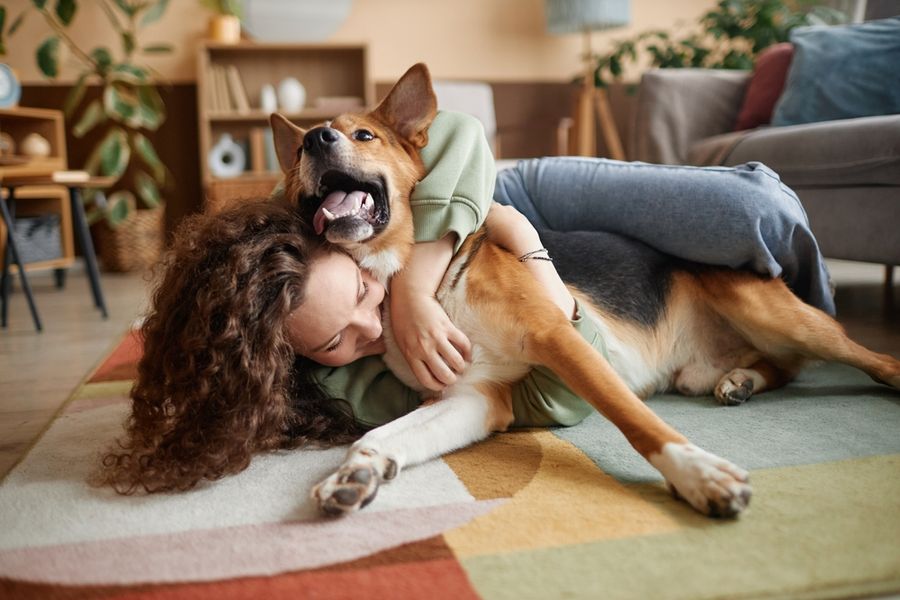
Bad weather doesn’t magically lower a dog’s energy level. If anything, it can make high-energy dogs feel even more restless, especially when their normal walks and outdoor play get cut short. That’s when the zoomies hit, the barking starts, and your living room becomes a racetrack. The good news is that a dog can get plenty of exercise indoors (both physical and mental). With the right activities, even the most energetic pup can burn energy and settle down, rain or shine.
Mental Work Is More Exhausting Than a Long Walk
A high-energy dog doesn’t just need movement. Many active breeds were designed to think, problem-solve, and stay busy. When the weather keeps them indoors, mental stimulation can be the fastest way to take the edge off. Puzzle toys, sniff games, and training challenges work because they engage your dog’s brain, not just their legs. Ten minutes of focused thinking can be as tiring as a long walk for some dogs.
Mental work is also great for building confidence and reducing anxiety. Dogs who have a “job” are often calmer and less destructive. If your dog tends to chew furniture or bark nonstop during storms, adding mental activities can shift their focus into something productive. Brain games don’t require much space, and they’re one of the easiest ways to tire out a dog when going outside isn’t realistic.
Food Puzzles and Slow Feeding Games That Keep Dogs Busy
Food puzzles are one of the best indoor tools for high-energy dogs because they combine reward, problem-solving, and time. Instead of feeding meals in a bowl, use a snuffle mat, treat-dispensing ball, lick mat, or puzzle feeder. Many dogs become calmer after working for food, and it’s a great way to extend mealtime so they don’t inhale dinner in 30 seconds and immediately demand entertainment.
DIY options work too. Sprinkle kibble in a rolled-up towel and let your dog sniff it out. Hide small piles of food around one room and let them “hunt.” Freeze wet food or plain yogurt on a lick mat for a longer-lasting activity. Licking is naturally soothing for dogs, which can help during storms. Food games are a simple, reliable way to burn energy and reduce boredom on indoor days.
Indoor Fetch, Tug, and Movement Games (Without Destroying the House)
Even indoors, dogs still need a way to move their bodies. The trick is choosing games that burn energy without turning your home into a disaster zone. Hallway fetch works great for many dogs, especially with a soft toy or foam ball that won’t break lamps. Tug is another excellent option, and it can be surprisingly tiring when played in short, structured sessions. It also helps build impulse control if you teach a “drop it” cue.
You can also create mini cardio games like “find the toy” where you toss a favorite stuffed animal into another room and send your dog after it. For small dogs, short bursts of play can be enough. For bigger dogs, combine movement games with training commands to increase mental effort. A little indoor play, done strategically, can take the edge off without requiring a backyard.
DIY Agility and Obstacle Courses Using Stuff You Already Own
You don’t need fancy equipment to create an agility-style workout at home. A simple obstacle course can challenge your dog physically and mentally while making indoor time more fun. Use couch cushions as stepping stones, broomsticks balanced on books for low jumps, chairs for weaving, and blankets for tunnels. The goal isn’t perfection—it’s safe movement, focus, and variety.
Start slow and keep it positive. Guide your dog through the course with treats and praise, and avoid anything slippery or too high. For dogs that love learning, obstacle courses can be incredibly engaging. It also strengthens your bond and improves coordination. Even ten minutes of agility-style work can leave a high-energy dog pleasantly tired. Plus, it gives your dog something exciting to do that doesn’t involve chewing your shoes out of boredom.
Training Sessions That Feel Like a Game (And Actually Wear Them Out)
Training is one of the most effective ways to tire out a dog indoors. A short session of learning new skills requires focus, self-control, and effort. Work on basics like sit, stay, down, and recall, then add fun tricks like spin, shake, touch, or “place.” You can also practice leash manners indoors by rewarding calm walking and attention. Dogs that struggle with impulse control often benefit a lot from indoor training games.
Make training feel like play. Keep sessions short—five to ten minutes—then repeat later in the day. Use high-value treats and lots of encouragement. If your dog gets bored, switch to a different skill. Training is also a great option for dogs that can’t do intense indoor movement due to size, age, or injury. Mental focus is tiring in the best way, and it creates a calmer dog even when the weather is miserable.
Chewing and Calm Activities That Help Dogs Settle
Sometimes the goal isn’t burning energy through movement—it’s helping your dog relax. Chewing is a natural stress reliever for many dogs, and it can be a lifesaver on rainy days. Provide safe chew options like bully sticks, dental chews, or durable chew toys designed for your dog’s chewing style. For some dogs, frozen Kongs filled with wet food or peanut butter can provide 20 to 40 minutes of calm focus.
Calm activities also include scent work, licking mats, and relaxation training. Teaching your dog to settle on a mat or bed can reduce pacing and whining, especially during storms. Combine a chew with a cozy space and low stimulation, and many dogs will naturally decompress. Not every indoor day needs to be chaotic. Sometimes a calm outlet is exactly what a high-energy dog needs to reset.
A Rainy-Day Routine That Works for Real Life
The best way to manage a high-energy dog on bad weather days is to have a simple routine. A mix of mental work, short bursts of play, and calming chew time can replace a long walk surprisingly well. Food puzzles, training games, and DIY obstacle courses keep your dog engaged without needing much space. The goal is variety, not perfection. Even small activities can add up to a tired, happy dog.
It also helps to remember that bad weather days are temporary. Your dog doesn’t need a marathon indoors—just enough stimulation to stay balanced. When your dog gets consistent outlets, indoor days become manageable instead of stressful. With the right tools and a little creativity, rain, snow, or extreme heat doesn’t have to turn your dog into a furry tornado.