

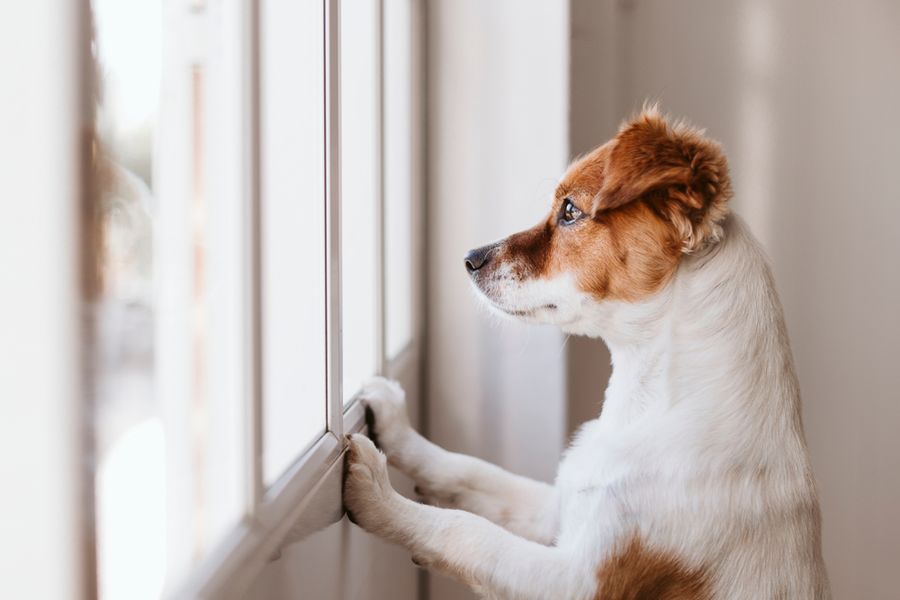
Some dogs handle alone time like champions. Others act like you’ve vanished forever the moment you step outside. Separation anxiety is more than a little whining—it’s real distress that can lead to destruction, accidents, nonstop barking, or even self-injury. It’s also incredibly stressful for owners, especially when neighbors complain or you come home to a chewed doorframe. The good news is that separation anxiety is common, treatable, and often improves with consistent training, structure, and the right support.
What Separation Anxiety Looks Like (And What It’s Not)
Separation anxiety tends to show up when a dog is left alone, not when the owner is home. Common signs include barking or howling that doesn’t stop, pacing in repetitive patterns, scratching doors or windows, chewing furniture or doorframes, and trying to escape from crates or rooms. Some dogs drool excessively, pant, tremble, or refuse food once they realize they’re alone. Accidents can happen, too, including urinating or defecating indoors, even in dogs that are normally house-trained.
It’s important to separate anxiety from other issues that look similar. A bored dog might chew things but won’t necessarily appear panicked. A dog that has incomplete house training may have accidents at random times, not only during absences. Some dogs also bark due to noises outside, not because they’re anxious. The difference is that separation anxiety is rooted in distress, not misbehavior.
Why Dogs Develop Separation Anxiety in the First Place
There isn’t one single cause of separation anxiety. It often develops after a major change in a dog’s life, such as being adopted from a shelter, losing a previous owner, moving homes, or having a family member leave the household. Dogs can also develop anxiety after a change in schedule. For example, a dog may adjust to someone being home all day, then struggle when that person returns to working outside the home.
Some dogs are simply more sensitive by nature. Genetics, early experiences, and temperament can all play a role. Older dogs can also develop anxiety more easily, especially if they’re dealing with physical discomfort or confusion. Separation anxiety is not a sign of a “bad dog.” It’s usually a sign that the dog feels unsafe when alone, and that emotional response needs support and retraining.
Signs That Your Dog Is Stressed Before You Even Leave
Many dogs with separation anxiety start showing distress long before the door closes. They learn patterns quickly, so pre-departure cues like putting on shoes, grabbing keys, or picking up a bag can trigger anxiety. Some dogs start following you closely, panting, whining, trembling, or acting clingy the moment they sense you’re preparing to leave. Others may hide, pace, or refuse treats because their stress level is already rising.
This anticipatory anxiety is one of the most important clues that a dog is struggling emotionally. It also explains why “just leaving quickly” doesn’t always help. If your dog is panicking before you even exit, the fear is already happening. Recognizing the early signs makes it easier to create a plan that reduces stress at the start, rather than trying to fix the situation after the dog is already overwhelmed.
Rule Out Medical Problems Before Assuming It’s Anxiety
Some symptoms that look like separation anxiety can also be caused by medical issues. Accidents in the home might be related to urinary tract infections, diabetes, kidney disease, hormone changes, or incontinence. Restlessness, pacing, or whining could also be related to pain, arthritis, or gastrointestinal discomfort. Even excessive licking, chewing, or drooling can sometimes have medical causes.
Before focusing fully on behavior training, it’s smart to involve a veterinarian, especially if symptoms appear suddenly or worsen quickly. A vet can help rule out underlying conditions and make sure your dog is physically healthy. This matters even more if medication becomes part of the treatment plan later. A dog can’t learn calm behavior effectively if they’re uncomfortable, and solving a medical issue can sometimes reduce anxiety-related behaviors dramatically.
Training That Helps: Build Confidence With Small, Repeatable Wins
The foundation of separation anxiety treatment is behavior modification, and the goal is teaching your dog that alone time is safe. This usually involves gradual training where the dog learns to be calm for short periods and slowly builds tolerance. One of the most effective skills is teaching a “settle” behavior, where your dog relaxes on a mat, bed, or in a safe space. Reward calm body language, not just commands.
Another helpful approach is changing how your dog experiences pre-departure cues. If picking up keys triggers panic, practice picking them up and sitting back down without leaving. Repeat until the cue stops causing stress. Progress is often slow, and that’s normal. Punishment makes separation anxiety worse because it increases fear. Consistency, patience, and a calm routine are what create real improvement over time.
Management Tools That Make Alone Time Easier
While training is happening, management is essential. Dogs with separation anxiety often do better when alone time is reduced temporarily, especially during early training. Pet sitters, dog daycare, or trusted family members can help prevent repeated panic episodes, which can reinforce the anxiety. An indoor camera can also be extremely helpful for monitoring behavior and understanding what happens after you leave.
Enrichment can also support the process, but it’s not a full cure by itself. Food puzzles, frozen treat toys, and special chew items can help your dog associate your departure with something positive. For some dogs, calming music or white noise can reduce stress triggers. Crates work well for some dogs, but others panic more when confined. The best setup is the one that keeps your dog safe and calm while training builds long-term confidence.
Helping Your Dog Feel Safe Alone Is a Process, Not a Quick Fix
Separation anxiety can feel overwhelming, especially when it affects your schedule, your home, and your peace of mind. The most important thing to remember is that your dog isn’t doing this out of spite. Anxiety behaviors come from fear and distress, and your dog needs help learning that alone time isn’t dangerous. With steady training, supportive routines, and the right tools, many dogs improve dramatically over time.
Progress often comes in small steps: a calmer departure, fewer accidents, shorter barking episodes, or less pacing. Those wins matter. Some dogs benefit from professional trainers or veterinary behaviorists, and in some cases, medication may be part of the plan. The goal is a dog that feels secure, not just a dog that stays quiet. With patience and consistency, alone time can become normal again—for both you and your dog.