

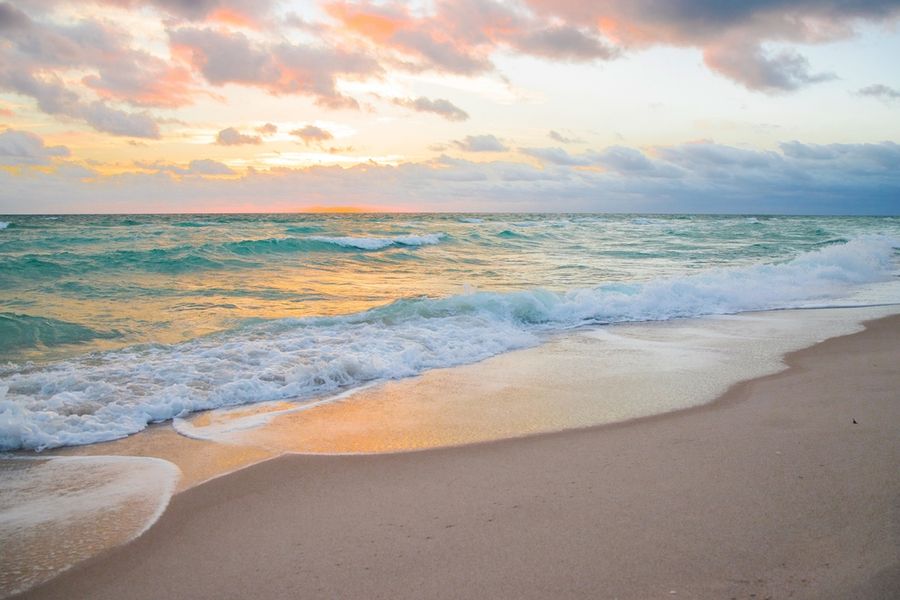
Finding a shark tooth on the beach feels like unearthing a tiny piece of prehistoric history. One minute you’re walking along the shoreline, and the next you’re holding something that once belonged to a real ocean predator. Shark tooth hunting is part treasure hunt, part nature walk, and it’s surprisingly addictive once you spot your first glossy black triangle in the sand. The best beaches tend to be fossil-rich, shell-heavy, and shaped by tides that constantly churn up new finds.
Venice Beach, Florida (The Shark Tooth Capital of the World)
If there’s one place in the U.S. that deserves top billing for shark teeth, it’s Venice, Florida. The area is famously known as the “Shark Tooth Capital of the World,” and for good reason. Venice sits on top of a fossil layer, and storms, tides, and wave action continually push fossilized teeth into shallow water and up onto the shore. Even casual beach walkers often find small teeth without any special tools.
The best hunting spots are often along the Gulf beaches in and around Venice, especially beaches south of the Venice Jetty near Humphris Park. Brohard Beach and the Venice Fishing Pier are popular starting points, and local shops even rent or sell scoop-and-sift tools designed specifically for shark tooth hunting. For beginners, Venice is the perfect place to start because success is very realistic.
Amelia Island, Florida (Great for Variety and Low-Tide Finds)
Amelia Island in northeast Florida is another excellent destination, especially for people who want a quieter beach experience than Venice. The island’s shoreline can produce a wide range of fossilized teeth, and low tide is often the best time to search. Teeth tend to gather near shell beds, darker patches of sand, and along the waterline where waves naturally sort and concentrate small objects.
Amelia Island is also a great option for families because the beaches are wide, walkable, and easy to explore for hours. The vibe is more relaxed, and the hunt feels less competitive. While you may not find the sheer volume Venice offers, the variety can be impressive. Bring a small sifter or mesh scoop and focus on areas where shells and pebbles collect—those are the natural “hot spots” for teeth.
New Smyrna Beach, Florida (A Solid Spot for Shoreline Searching)
New Smyrna Beach is known for surf culture, long stretches of sand, and a coastline that can produce plenty of shark teeth. Located near the Indian River Lagoon, it’s a place where waves regularly wash up shells, small fossils, and the occasional tooth. The best strategy here is often simple: walk slowly along the waterline and look for shiny black triangles mixed in with broken shell pieces.
This beach is ideal for people who prefer a more casual approach rather than heavy sifting. Early morning walks can be especially productive, since fewer people have combed the shoreline and the tide may have delivered fresh material overnight. A small baggie or container for finds is helpful, and water shoes are a smart idea because shell fragments can be sharp. With patience, New Smyrna can be a very rewarding place to hunt.
Topsail Beach, North Carolina (Fossil-Rich Shores and Big Potential)
Topsail Beach in North Carolina is a favorite among shark tooth hunters who want East Coast variety beyond Florida. The shoreline is known for being fossil-rich, and it can produce not only shark teeth but also prehistoric shells and other interesting finds. The tides and currents along this stretch of coast create natural conditions that expose fossils over time, especially after storms or strong wave activity.
Topsail is a great destination for hunters who like long walks and the thrill of not knowing what might show up. It’s also a strong option for anyone hoping to find larger teeth, since some North Carolina beaches are known for producing impressive specimens. For the best results, aim for low tide and search along shell lines where debris naturally collects. The more you slow down and scan carefully, the more teeth you’ll spot.
Folly Beach, South Carolina (A Charleston-Area Treasure Hunt)
Folly Beach near Charleston offers a fun mix of beach time and fossil hunting. The combination of tidal movement and coastal geography makes it a solid spot for shark teeth, especially for people who enjoy exploring areas where shells, pebbles, and small rocks gather. Teeth are often easiest to find after storms or on days when the surf is actively shifting sand around.
Folly is also appealing because it’s close to a major city, making it easy to pair shark tooth hunting with restaurants, sightseeing, and other activities. It’s a great “vacation-friendly” beach where fossil hunting can be part of a larger trip. For best results, bring a small hand sifter or mesh scoop and focus on the tide line. Even a quick hour of searching can produce a handful of small teeth if conditions are right.
Edisto Beach, South Carolina (Quiet, Natural, and Great for Patient Searchers)
Edisto Beach is a quieter, more natural-feeling South Carolina option that many visitors love for its laid-back atmosphere. It’s a strong place for shark teeth because the shoreline is less developed and often less crowded, meaning fewer people are actively hunting. That alone can improve your odds. The beach’s natural shell deposits and shifting sands can reveal fossilized teeth, especially around low tide.
Edisto is perfect for patient searchers who enjoy the process as much as the prize. Walking slowly, scanning for glossy black shapes, and checking shell piles can lead to some very satisfying finds. The calm vibe also makes it great for families who want a low-pressure beach day. If you’re bringing kids, Edisto is a fun place to teach them how to spot shark teeth by comparing teeth shapes to shell fragments.
The Best Time and Method to Find Shark Teeth (So You Don’t Leave Empty-Handed)
Timing matters almost as much as location. Low tide is one of the best times to hunt because more shoreline is exposed and waves have recently sorted sand and shells. Early morning is also helpful since beaches are less picked over. Storms can dramatically improve hunting conditions because they churn up deeper layers of sand and push fossils closer to shore. Even a windy day can create better tooth deposits than a calm one.
The simplest method is walking the waterline and scanning for shiny black triangles. Another effective approach is scooping sand and shells near the wave break, then sifting it through a mesh strainer. Many hunters focus on the small drop-off ledge where waves break, since teeth often collect there. Bring sunscreen, water, and a small container for finds. Once you spot your first tooth, your eyes will adjust—and suddenly you’ll see them everywhere.
The Beachcomber’s Payoff: Why Shark Tooth Hunting Never Gets Old
Shark tooth hunting is one of the rare travel activities that’s exciting, inexpensive, and genuinely fun for all ages. A good beach, a low tide, and a little patience can turn an ordinary walk into a treasure hunt. Places like Venice, Amelia Island, and Topsail Beach offer a real chance of finding fossilized teeth, even for beginners. Every tooth feels like a tiny win, and each one has its own shape, size, and story.
The best part is that shark tooth hunting is never the same twice. Tides shift, storms rearrange the sand, and every beach has its own personality. Some days you’ll find a handful, and other days you’ll find nothing—until one perfect tooth appears right when you’re about to give up. That unpredictability is what makes it addictive. Once you start, it’s hard to stop scanning the sand.